


My Body Holds Congressional Hearings Without Me
By: Karen Brown
For over 16 years, every night while I sleep, my body convenes an unauthorized meeting, a full congressional hearing, complete with subcommittees, to decide which parts will torture me the next day. I wake up to a memo. I was never invited. I've tried. They won't add me to the calendar.
This morning's memo: "Attention human: This is your lower right hip. I've decided today is MY DAY to make you walk like you're auditioning for a pirate movie. Good luck with those stairs."
This is my daily reality living with scleroderma. For a long time, I couldn't get anyone, including myself, to fully hear.
The Diagnosis I Wasn't Ready to Hear
In 2016, a doctor finally said the word "scleroderma" to me. I nodded as if I understood. I didn't! I filed it away quietly, the way you file something you're not ready to unpack. When your body has been contradicting itself for years...vanishing veins, mystery headaches, symptoms that mimicked over a dozen other conditions, one more diagnosis doesn't land like clarity. It lands like static. I heard the word. I didn't hear what it meant, or what it would demand of me.
In 2017, when I was diagnosed again by a different rheumatologist, it joined a growing pile of diagnoses. Eleven arrived in just six months.
The Hard Part Nobody Warns You About
Getting a diagnosis is not the same as getting understood. Over four months, I had weekly visits to doctors, labs, and diagnostic centers trying to get answers to what was wrong with me. I've sat through six clinicians just trying to get an IV placed because my once juicy and plump veins began to play hide-and-seek. I've had blood samples mixed up and had to start over, just 17 minutes after sitting through the tortuous experience. I've had a doctor spend my appointment talking about her own menopause instead of my symptoms.
Self-advocacy sounds simple until you're the one doing it from inside a body that is chronically exhausted, foggy, and in pain. Until you're the one who must keep pushing after three emergency room doctors have already moved on. After one hospital stay, my own persistence in tracking my body's pattern led us to discover that a combination of my medications was working against me, and that I was severely allergic to another. That wasn't a doctor's catch. That was mine. It’s both infuriating and frustrating. And it’d be so easy to stop monitoring and speaking up. But I’m wired to solve problems, and I have evidence that self-advocacy has saved me and improved the quality of my life. So, each time I find myself sitting in the dungeon of despair, I allow myself to cry and then I dial up my Nancy Drew detective skills, so that I can help solve the issues.
From Surviving to Building Something
Years of agony taught me that I had to become the CEO of my own body, because no one else was qualified for the job. After much trial and error and partnering with my healthcare professionals, I built a daily routine of medications, sleep, nutrition, exercise, and avoidance of stress inducers. All to minimize my day-to-day chronic pain and fatigue by about 70%.
But my potholed-filled road to diagnosis, treatment, and living a challenging but meaningful life, was no longer good enough.
For many decades, every year I celebrate my birthday in a remarkable way. In 2023, I decided that my birthday present would be to live a transformative life by saving, extending, and improving the quality of life for all patients and caregivers. But as a person with a bias for action: how? At first, I wanted to donate a kidney. I was rejected. That’s how I learned about the connection between scleroderma and the kidney. After feeling helpless and crying for three weeks and after exploring several other non viable ways to achieve my goal, I landed on patient advocacy.
Using my experience with healthcare professionals to help others was the most practical, effective, and satisfying answer.
With a focus on self-advocacy, I could share what I had learned from navigating healthcare relationships that sometimes left me feeling dismissed, overwhelmed, or unheard, and how I learned to speak up for myself. I could share how I prepare for and follow up after appointments. I could also share how I’ve advocated for others. This led me to officially charter Rare Disease Advocacy, a nonprofit dedicated to saving, extending, and improving the quality of life for patients living with rare diseases, with scleroderma as my primary focus.
Come Find Your Voice With Me
Finding my voice as a patient was a slow awakening. Recognizing that I needed to HEAR what I was being told, to ask questions, speak up, be heard, and play an active role in my own care. Through my work with Rare Disease Advocacy, I am committed to helping patients and families find that voice, and helping create practical tools that make self-advocacy a little less overwhelming.
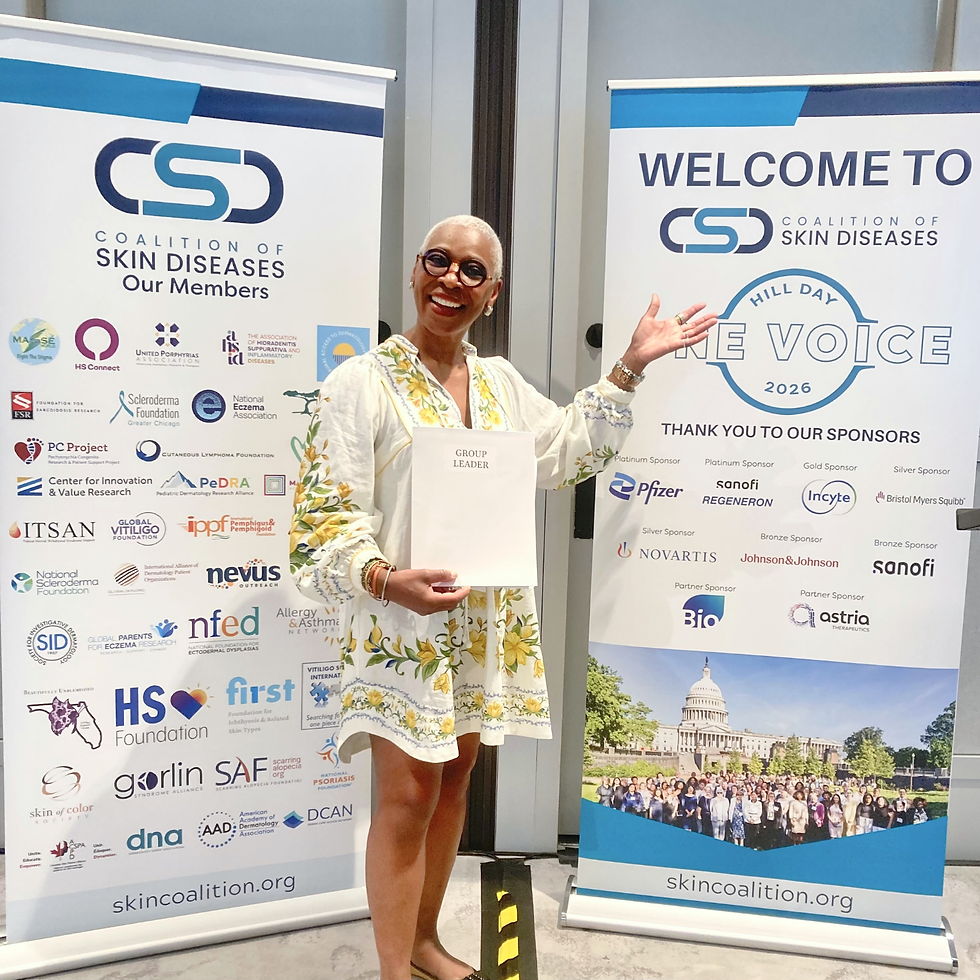
That's why I'm excited to bring this conversation to the Patient Education Conference on October 17 in Chicago. During my interactive workshop, Using Your Voice: An Interactive Self-Advocacy Workshop, we'll have an honest conversation about becoming your own best advocate.
Whether scleroderma touches your life as a patient, caregiver, or healthcare professional, I hope you'll join me to share ideas, experiences, and practical strategies with people who truly understand. Together, we'll explore ways to navigate appointments, ask better questions, communicate our needs, and build tools that can help us live better with scleroderma.
And I would love your help making this work even more impactful.
Whether or not you can attend the conference, will you share your voice with me? Your experiences and insights can help shape the tools, resources, and conversations I create through Rare Disease Advocacy, and help other people with scleroderma feel more prepared, empowered, and heard.
If you are a patient, caregiver, or healthcare professional touched by scleroderma, please complete the survey that best fits your experience below. And please consider sharing it with someone who may still be searching for the right diagnosis, care, or confidence to speak up for themselves.
Patient Survey: https://forms.gle/HQTsKK4sTJaJibsS6
Caregiver Survey: https://forms.gle/5kg5hSDDzaenoLy68
Healthcare Provider Survey: https://forms.gle/yt3C5xaE3zV5a23k9
The surveys will remain open from August 10 to December 10, 2026.
Meet Karen in Chicago on October 17 – Register here!
About Karen Brown
Karen Brown's relentless self-advocacy changed the course of her life, and she now dedicates herself to helping rare disease patients and caregivers advocate for themselves through her nonprofit, Rare Disease Advocacy, where she focuses on self-advocacy education. With 39+ years as a business executive and professor and 20+ years as a board director, she brings a compassionate approach to leadership and advocacy at the national and state levels.
Patient Voices Disclaimer: The views and experiences shared in this blog reflect the personal perspectives of patients and are not medical advice. Before pursuing any treatment, therapy, medication, or other idea discussed here, please talk with your physician or healthcare provider to determine what’s right for you.


Comments